
Example
Multi-Camera Vision Acquisition and Processing System
- Available across all Gidel frame grabber systems
- Supports GigE Vision, CoaXPress and Camera Link cameras
- Handles >100,000 FPS uncompressed image streams
- Synchronized acquisition and recording from 100+ cameras
- High-speed recording of compressed or uncompressed streams
- Allows per-camera and per-frame pixel formats
- Handles dynamic frame sizes and varying incoming data formats
- Optional inline Image Signal Processing (ISP) and image compression
- High-bandwidth PCIe-based host interface
- Integrated with the Gidel Grabber SDK suite
- Extensible through the ProcVision suite for custom FPGA logic
InfiniVision: Scalable Multi-Camera Vision System
InfiniVision is a high-performance multi-camera system that powers Gidel’s scalable Imaging & Machine Vision platform, enabling synchronized acquisition, processing, and recording across up to 100+ sensors for applications that demand massive throughput and coordinated operation at scale.
Scalable Architecture for Server and Edge
InfiniVision is designed for both centralized server-based architectures and compact embedded deployments:
-
Hardware Support: Deploy on Gidel PCIe Frame Grabbers, Mini Jetson Frame Grabber Systems, or PGA Modules.
-
Control: Includes a ready-to-use GUI and a comprehensive API for full control over the FPGA-based acquisition and recording pipeline.
-
Interfaces: Supports GigE Vision, CoaXPress, and Camera Link, with custom protocol support available upon request.
Synchronized Dynamic Multi-Camera Acquisition and Recording
As a multi-camera vision system, InfiniVision coordinates acquisition across large camera arrays. It keeps image data from all cameras aligned in time. This capability is critical for systems that rely on spatial or temporal correlation between multiple viewpoints.
The platform handles very high aggregate throughput and high-speed recording. Some configurations can exceed 100,000 FPS for uncompressed image streams, depending on the hardware setup. FPGA resources distribute acquisition and preprocessing tasks, which helps maintain stable operation under sustained load as camera counts and data rates grow.
Flexible Frame Handling and Inline Image Processing
InfiniVision captures image data on the fly and does not enforce static frame definitions. Each camera, and even each frame, can use different resolutions, pixel formats, or dynamic ROIs. This approach allows designers to combine heterogeneous camera types and adapt acquisition behavior in real time. It also avoids reconfiguration or downtime.
The acquisition path includes modular inline processing blocks such as Image Signal Processing (ISP) and image compression. These FPGA-based blocks help balance image quality, bandwidth, storage, and latency. They do so while preserving synchronized multi-camera operation.
For applications that require strict determinism, guaranteed frame capture, or line-scan–oriented acquisition, Gidel also offers ProcFG. While InfiniVision focuses on flexible, large-scale, synchronized multi-camera systems, ProcFG is optimized for deterministic image acquisition pipelines where fixed timing, controlled buffering, and complete frame integrity take priority.
Why Choose the InfiniVision Multi-Camera Vision System?
InfiniVision targets vision systems that must scale to large camera counts. It maintains synchronized acquisition and reliable high-speed recording as systems grow. OEMs and system integrators can capture, process, and record large volumes of image data without rigid frame definitions or camera limitations.
By combining flexible multi-camera acquisition, inline FPGA processing, and scalable recording in one architecture, InfiniVision reduces system complexity. It also lowers long-term integration risk. This approach lets designs evolve from early prototypes to fleet deployments while preserving software investment, acquisition behavior, and performance consistency.
General
Supported Cameras
- 1-10 GigE Vision
- CoaXPress-12 / CoaXPress-6
- Camera Link
- Custom User Protocols
Camera Types
- Area
- Line Scan
Acquisition Scale
>100,000 FPS aggregate throughput
Acquisition Rate
1-800 Gb/s, depending on the Frame Grabber/Edge Computer used
Trigger Synchronization
Support 100+ Cameras
Pixel Formats Supported
- Mono, Bayer, RGBA (8, 10, 12, 14 and 16 bits/color)
- RGB (8, 10 and 12 bits/color)
Grabbing & Recording Modes
- Uncompressed image streams
- Compressed image streams
Frame Size Handling
Dynamic frame sizes and varying incoming formats
ROI Handling
Dynamic ROI handling per camera and per frame
Connectors
- QSFP28/SFP+ (for GigE Vision)
- SDR26 (for Camera Link)
- HD-BNC (for CoaXPress)
- VGA15-pin (for GPIO)
- Option for custom connector
FPGA
- Altera Stratix 10 (NX/MX/SX)
- Arria 10 GX
The InfiniVision is highly modular!
Want to adjust our Multi-Camera System according to your Vision?
| Name | Description | Type | Size | |
|---|---|---|---|---|
|
InfiniVision
|
Datasheet | 186.8 KB | ||
|
InfiniVision
|
Block Diagram | PNG | 68.9 KB | |
|
Case study: 360-Degree Camera Solution
|
Gidel’s InfiniVision technology enables companies developing Virtual Reality and Augmented Reality products to capture high... | Link | — | Read |
|
InfiniVision - Press Release
|
Gidel Launches Customizable, Ready-to-Use FPGA Framework for Multi-Camera/Sensor and Multi-Processing Vision Systems | 130.1 KB |
This short demo, filmed at Intel FPGA Technology Day in Japan, showcases Gidel’s InfiniVision platform — an FPGA-based engine built for real-time, multi-stream image processing.
The video highlights how InfiniVision captures and processes multiple video channels simultaneously with deterministic, ultra-low-latency performance, while integrating seamlessly with Intel’s FPGA technology.
Viewers also get a quick look at Gidel’s lineup of imaging and vision accelerators, demonstrating the company’s long-standing expertise in delivering high-bandwidth, high-reliability FPGA solutions for demanding vision workloads.
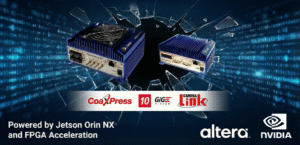
Breaking the Jetson I/O Wall: Gidel’s FPGA-Powered Edge AI Vision Systems
Gidel Expands FantoVision with Three Dedicated Edge AI Vision Systems, introducing specialized models for CoaXPress 12, 10GigE Vision, and Camera…
Read more

Meeting the Challenges of High-Resolution Outdoor Imaging
High-resolution outdoor imaging faces critical challenges: extreme lighting, massive data streams, and strict SWaP limits. Discover how the partnership between…
Read more

Improving Performance in Low Latency Systems Without Added Latency
In modern AI and vision applications, true performance requires more than just speed—it demands a balance of throughput, accuracy, and…
Read more

Gidel Quality+ Compression Recognized as a Top Innovation for 2025 by inVISION Magazine
Gidel Quality+ compression has been honored as a Top 10 Innovation of 2025 by inVISION Magazine. Discover how this award-winning…
Read more

AI Breast Cancer Screening Device Uses Gidel’s FantoVision
ThermoMind introduces Vision One, a radiation-free breast cancer screening device powered by Gidel’s FantoVision40. By combining multimodal sensing with real-time…
Read more

Edge Imaging Bandwidth Webinar: Overcoming Bandwidth Limits on the Edge
Join Reuven Weintraub, Founder and CTO of Gidel, as he demonstrates how to overcome high-bandwidth imaging challenges at the edge.…
Read more

Gidel’s FantoVision Honored by the 2023 Vision Systems Design Award for Edge Computer Vision
Innovative edge computer vision takes center stage as Gidel’s FantoVision platform receives the Silver Award from Vision Systems Design. Recognized…
Read more

High-Speed Image Acquisition | Gigapixel Processing per second in Vision Systems
Achieving reliable high-speed image Acquisition now requires handling massive data loads, often demanding Gigapixel Processing per second in Vision Systems.…
Read more

First Heterogeneous Embedded Vision Systems Combining Jetson and FPGA
Gidel integrates the NVIDIA Jetson Orin NX 16GB into the FantoVision series, creating a breakthrough heterogeneous embedded vision system. With…
Read more

Enabling High-Speed AOI Machines in Mail Sorting
Discover how a leading mail sorting manufacturer leveraged Gidel’s FPGA-based vision infrastructure to optimize high-speed AOI Machines. By integrating the…
Read more

High Quality Image Compression — Compressing Image Data, Not Image Quality
As modern sensors drive data rates to gigapixel levels, standard codecs often sacrifice detail for bandwidth. This article explores how…
Read more

Fast & Furious Embedded Computer Vision Platform for 20 Gb/s Processing
Discover the FantoVision 20, an ultra-compact embedded computer vision solution delivering real-time processing at up to 20 Gb/s. Combining NVIDIA…
Read more

FPGA vs GPU | Is This the End of FPGA?
In the Next FPGA Platform conference, Gidel Founder & CTO Reuven Weintraub explains why FPGAs are reclaiming the spotlight in…
Read more
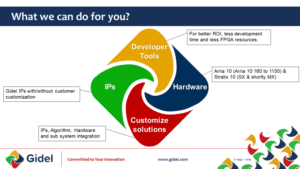
CertifEye Speeds Up FPGA and ASIC Development by 3×
Accelerate your FPGA imaging projects with CertifEye, Gidel’s real-time validation tool. By enabling developers to inject and analyze test images…
Read more
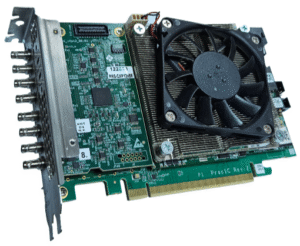
Gidel First to Market with 100Gb/s CoaXPress CXP 12 Frame Grabber
Gidel, a technology leader in cutting-edge Vision and Imaging solutions based on FPGAs, today announced the Proc1C10N-CXP12, a new CoaXPress…
Read more

Gidel Launches Real-Time JPEG Compression IP
Gidel, a technology leader in cutting-edge Vision and Imaging solutions based on FPGAs, today announced a new real-time JPEG Compression…
Read more

Gidel Launches Real-Time Reversible Compression IP
Gidel, a technology leader in high-performance accelerators utilizing FPGAs, today announced a new Reversible Compression IP. This breakthrough solution reduces…
Read more
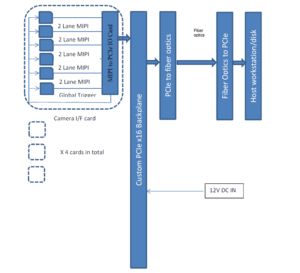
Gidel Powers New 360 Degree Camera Solution for VR and AR
Discover how Gidel’s InfiniVision technology powers next-gen VR with a fully synchronized 24-camera array. Learn how our scalable FPGA architecture…
Read more
FAQ
InfiniVision is a high-performance multi-camera system designed for synchronized acquisition, processing, and recording across massive camera arrays. It enables coordinated operation for up to 100+ sensors, providing the scalable architecture needed for applications that demand extreme throughput and precise temporal alignment across multiple viewpoints.
InfiniVision is designed for maximum deployment flexibility across both centralized and edge architectures. It is available across all Gidel frame grabber systems, including PCIe Frame Grabbers, Mini Jetson Frame Grabber Systems, and FPGA Modules. It includes a ready-to-use GUI (for Windows) and a comprehensive API (for Windows and Linux) for full control over the pipeline.
The system is engineered for massive scale, supporting synchronized acquisition from over 100 cameras. Depending on the hardware configuration, InfiniVision can handle aggregate throughput exceeding 100,000 FPS for uncompressed image streams, maintaining stable operation and reliable high-speed recording even as camera counts and data rates grow.
InfiniVision offers extensive flexibility, supporting Area and Line Scan cameras across all major vision interfaces, including 1-10 GigE Vision, CoaXPress-12, CoaXPress-6, and Camera Link. Additionally, support for custom user-defined protocols is available, allowing for the integration of specialized sensors into the unified vision network.
Unlike rigid systems, InfiniVision does not enforce static frame definitions. It captures image data on the fly, allowing each camera—and even each individual frame—to use different resolutions, pixel formats, or dynamic ROIs. This allows designers to combine different camera types and adapt acquisition behavior in real time without system reconfiguration or downtime.
Yes. The acquisition path includes modular inline FPGA-based processing blocks, such as Image Signal Processing (ISP) and image compression. These blocks allow the system to balance image quality, bandwidth, and storage requirements while preserving strictly synchronized multi-camera operation and predictable low latency.
Need more? Check out our other products!

ProcFG

FantoVision40

FantoVision40-CXP12

FantoVision20

FantoVision20-GigE

FantoVision20-CL

HawkEye-CXP12

HawkEye-20GigE

HawkEye-CL

Proc10A-CXP

Proc10A-40GigE

Proc10M

Proc10N

FDB Modules

Proc1C10N-CXP12

Proc1C10M-120GigE

Proc1C10N-120GigE

HDR Correction

JPEG Compression

Lossless Compression

Quality+ Compression
ProcVision Suite
1 / 2
