PCIe x8 (Gen. 3) FPGA Computation Accelerator
- Altera Stratix 10MX 2100 HBM2
- 8 GB HBM for 300 GB/s
- 7,920 18 x19 MAC
- 4 x QSFP28 for up to 400 Gb/s aggregate bandwidth
- Option for SoC
- Supported by the Proc Dev Kit FPGA Programming SDK
- Form factor: full-height, double-slot, half-length PCI Express card
Proc1C10M – High-Performance FPGA Accelerator Card with HBM2 Technology
The Proc1C10M™ is a compact, ultra-high-performance accelerator card built on Altera Stratix 10 MX. Designed for compute-intensive, low-latency, and high-bandwidth applications, it not only delivers massive processing power but also integrates HBM technology with up to 1,600 Gb/s of I/O bandwidth. As a result, this FPGA accelerator ensures unmatched data throughput for today’s most demanding workloads.
Unmatched Performance
This compute accelerator integrates 16 × 25 Gb/s full-duplex transceivers and a multi-level memory architecture. Additionally, the memory ecosystem includes embedded MLABs and M20K, tightly coupled HBM and eSRAM, and up to 128 GB DDR4. Therefore, the Proc1C10M offers exceptional processing capabilities and consistent low-latency performance for HPC, AI acceleration, storage, networking, and high-end imaging workloads.
Connectivity & Scalability
The half-length PCIe Gen3 x16 accelerator card includes 4 × QSFP28 ports, a Gidel PHS connector for daughterboards, and 19 GPIOs for peripheral control. Furthermore, the PHS supports up to 128 Gb/s Rx/Tx, enabling seamless integration with 8× CoaXPress-12 cameras via a Gidel CXP daughterboard. Consequently, the Proc1C10M is ideal for vision-intensive and real-time applications.
Development Tools
Supported by Gidel’s advanced development suite, the Proc1C10M FPGA accelerator card simplifies complex project deployment. Moreover, it supports development in both C and HDL, reducing integration time, improving reliability, and accelerating time-to-market.
Why Choose the Proc1C10M Accelerator Card?
-
HBM technology for 10X more DRAM and eSRAM bandwidth
-
1,600 Gb/s I/O bandwidth for high-throughput applications
-
Compact PCIe design with flexible I/O
-
Optimized for HPC, acceleration, networking, storage, and imaging workloads
For more accelerator card options, visit FPGA Compute Acceleration – Gidel

General
- 8GB HBM
- 7,920 embedded 18x19 multipliers
- 134 Gb embedded M20K and 11 Gb MLAB blocks
- 2,073,000 LEs
- 7,920 18 x19 MAC
- Embedded M20K & MLAB blocks
- 16 x 26 Gb/s transceivers
- Flexible clocking system
- Temperature monitoring
- Internal voltage monitoring
Connectivity
- 4 x QSFP+
- 1 x PHS (Gidel High Speed Connector for daughter boards)
Environmental conditions
- Continuous Operation: 10 - 80% (non-condensing)
- Peak Operation: 10 - 90% (non-condensing)
Development tools
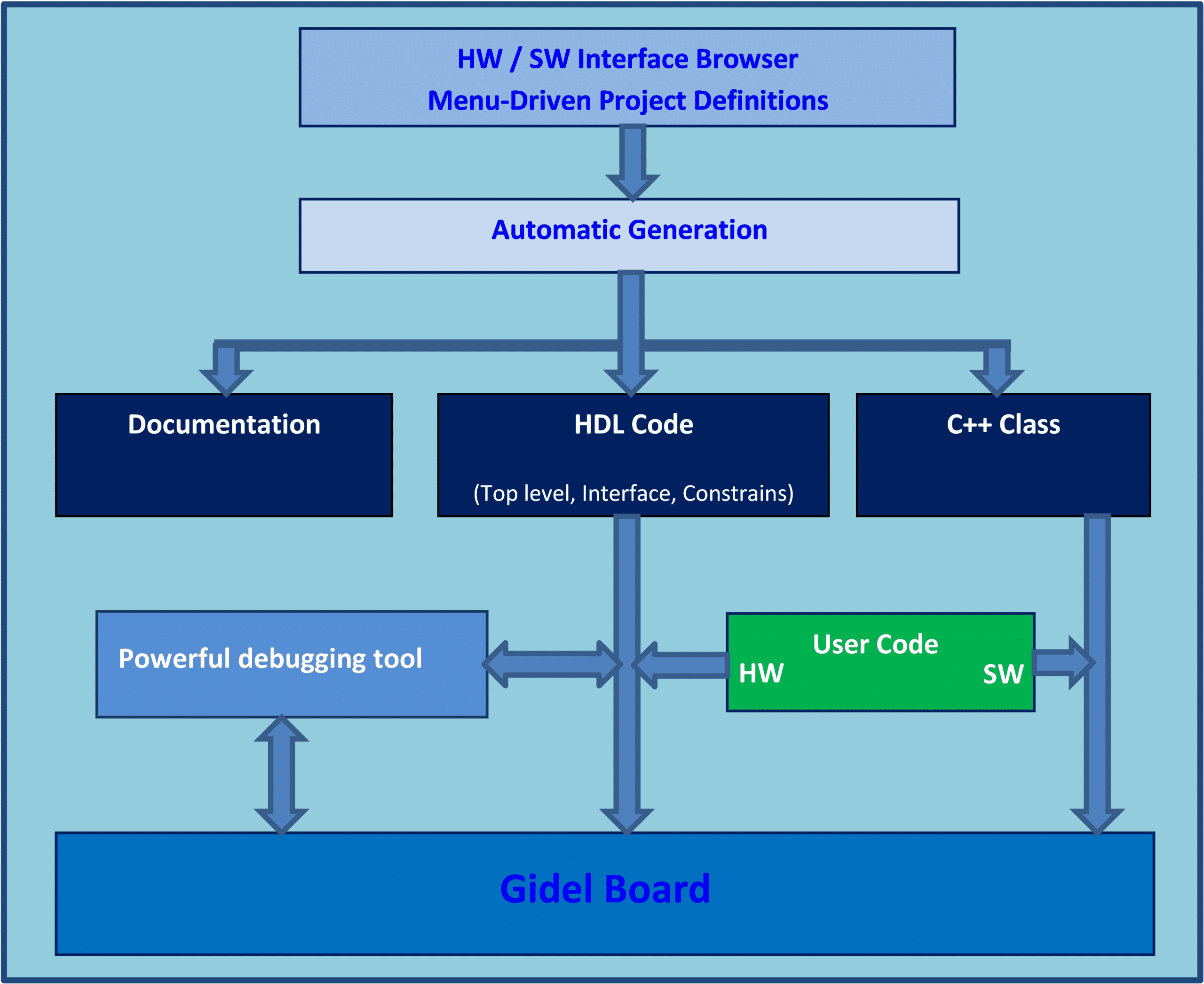
- Generation of FPGA environment code, including all board/IP constraints and a user-logic wrapper
- Generation of a dedicated application driver with an API
- Splitting physical on-board memories into logical memories, each with independent, parallel access to/from user logic
The Proc1C10M™ system is based on the Proc10M module mounted on the Gidel Proc1C carrier board.
For additional Proc10M carrier board options models, including options that utilize the Proc10M’s full resources, contact Gidel.
Development Tools
For HDL Design Flow
- Generation of environment FPGA code, including all board/IP constrains and user logic wrapper
- Generation of dedicated application driver with API support
- Splitting of physical on-board memories into logical memories with independent parallel access to/from user logic
- Altera Tools: Quartus Prime Pro, including QSys and DSP builder
| Name | Description | Type | Size | |
|---|---|---|---|---|
|
Proc10M: Datasheet
|
FPGA module | 209.7 KB | ||
|
Proc10M: Block Diagram
|
FPGA module | JPG | 34.5 KB | |
|
Proc1C: Datasheet
|
Carrier Board | 133.5 KB | ||
|
Proc1C: Block Diagram
|
Carrier Board | JPG | 57.1 KB |
FAQ
The Proc1C10M is built on the Altera Stratix 10 MX 2100, featuring over 2 million logic elements and integrated HBM2 technology. This allows the card to deliver up to 10X more DRAM and eSRAM bandwidth than traditional accelerators, making it the premier choice for compute-intensive tasks like HPC, AI acceleration, and high-end imaging.
The Proc1C10M integrates 8 GB of HBM2, providing a staggering 300 GB/s of memory bandwidth. Combined with a multi-level memory ecosystem—including embedded M20K, MLABs, and tightly coupled eSRAM—it achieves an unmatched aggregate I/O bandwidth of 1,600 Gb/s. This ensures consistent low-latency performance even under the most demanding data-processing workloads.
The board is a connectivity powerhouse, featuring 4 × QSFP28 ports for up to 400 Gb/s aggregate bandwidth. It also includes 16 × 26 Gb/s full-duplex transceivers and a PCIe Gen3 x16 host interface. For specialized expansion, the Gidel PHS connector supports up to 128 Gb/s, enabling seamless integration with daughterboards for up to 8× CoaXPress-12 cameras.
Yes. Thanks to the high-bandwidth PHS connector and CXP daughterboard support, the Proc1C10M is ideal for vision-intensive applications. It can handle massive uncompressed image streams in real time, making it the perfect engine for volumetric imaging, high-speed inspection, and real-time AI-based image analysis.
Given its massive processing power, the Proc1C10M uses a dual-slot, full-height, half-length PCIe form factor. While power consumption depends on the specific user application and FPGA type, it typically operates at less than 100W. Like other Gidel cards, it maintains high reliability with an MTBF exceeding 1 million hours.
Yes. It is fully supported by the Gidel ProcDev Kit (FPGA Programming SDK), which simplifies complex project deployment. It supports both C and HDL-based workflows, allowing developers to split physical on-board memories into logical memories for parallel access and generate dedicated application drivers with an API.
The Proc1C10M is engineered for the most demanding technical challenges, specifically:
-
HPC & AI Acceleration: High-Performance Computing and deep learning training/inference.
-
Network & Storage: Ultra-high-speed networking, data center acceleration, and storage controllers.
-
High-End Imaging: Real-time 8K video processing, medical imaging, and synchronized multi-camera arrays.
All Gidel products come with a 12-month warranty, dedicated technical support, and regular firmware and driver updates to ensure high-performance reliability in demanding, long-term deployments.